
Blogs
The latest cybersecurity trends, best practices, security vulnerabilities, and more

The Adversary Brief – November 2026 Edition
Who controls your agentic SOC? Balancing data sovereignty, availability, and cost
By James Murphy · November 11, 2026
Welcome to the inaugural edition of The Adversary Brief. What’s driving the shifts in how we defend, and who’s behind the attacks making headlines? This series is here to get you up to speed. Each edition takes on one topic that matters right now, from the wider trends reshaping cybersecurity to cybercrime and nation-state threats. We cover what it is, how it works, why it matters and, most importantly, what you can do about it.
As more organizations move toward establishing an agentic SOC, where AI agents triage events, investigate incidents, and recommend next steps, a key question emerges: If the brain of your AI SOC is running in somebody else's cloud, under somebody else's rules, and on someone else's meter, then who is really in control?
With mod_php is the highest risk setup, with code execution demonstrated before any application code runs. PHP-FPM, CGI, FrankenPHP, and LiteSpeed are also affected. Researchers have demonstrated exploitation against WordPress, Drupal, and Joomla, and confirmed it against other popular platforms including Magento, Nextcloud, and phpMyAdmin.
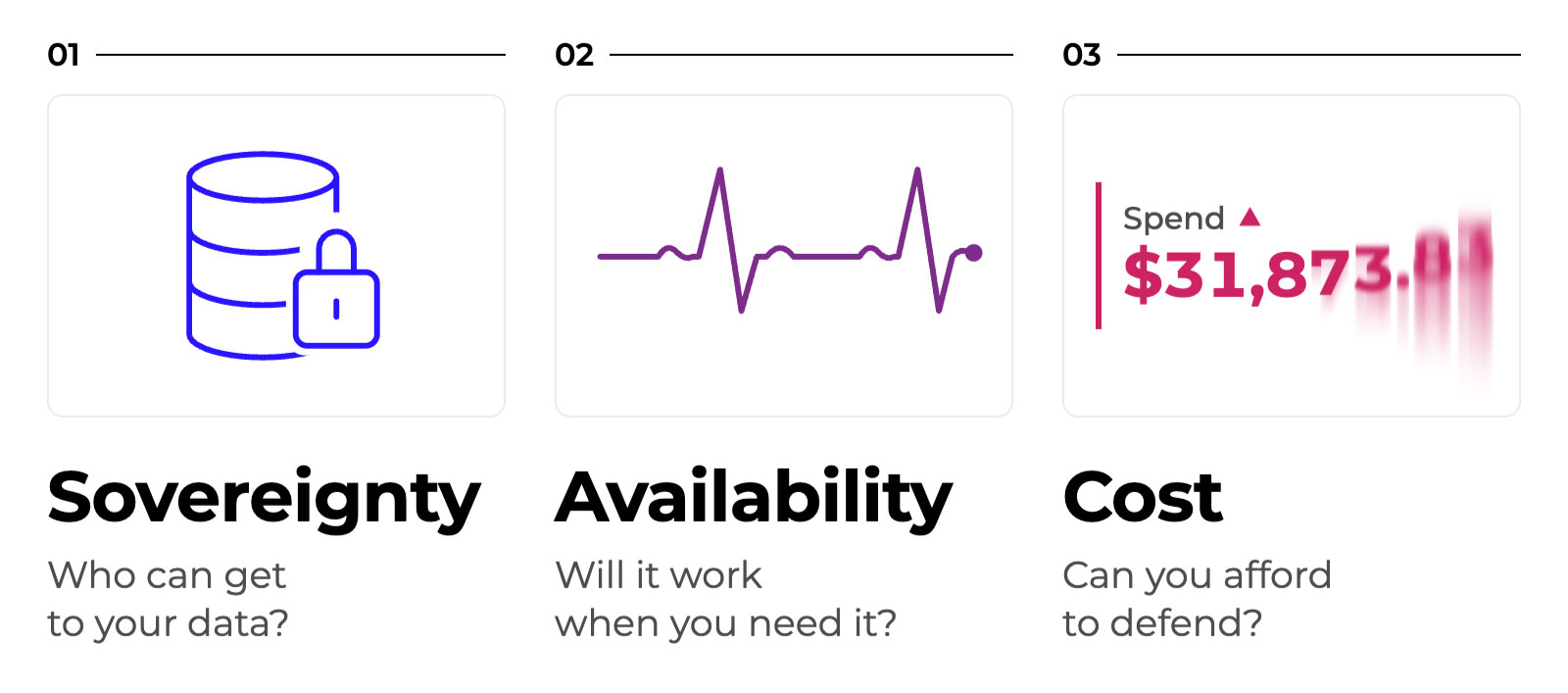
To answer that, you need to look at three critical factors:
- Data sovereignty: Who can get to your data?
- Availability: Can the AI actually work when you need it most?
- Cost: Can you afford to defend yourself?
In this blog, we’ll explore how these factors impact an agentic SOC and share how Trellix Wise for Private Cloud resolves these challenges. As the core of an agentic SOC, Trellix Wise for Private Cloud is built on a single, flat-fee subscription that runs entirely on your hardware, so your data never needs to leave your walls. Trained on Trellix’s decades of threat research and guided by your analysts’ reasoning, it turns thousands of alerts into a handful of high-confidence verdicts in minutes, not hours or days.
Why is data sovereignty crucial for an agentic SOC?
Let's start with who can get to your data. If you think about what actually sits in a SOC—every alert, every vulnerability, every compromised account, and every incident—it's basically a map of every potential weakness in your organization. This makes it incredibly valuable to attackers, as well as to governments.
Governments around the world can lawfully access data sitting with cloud and AI providers in a variety of circumstances. For example, the US CLOUD Act, mutual legal assistance treaties, and other national intelligence acts may allow law enforcement and other government agencies to compel data disclosure—potentially without notice to data owners. Companies have expressed valid concerns about covert access by government agencies, where a gag order might require their cloud or AI provider to conceal disclosures—which risks exposing highly sensitive information without the company’s knowledge.
These risks potentially exist regardless of where the data sits. Microsoft France, for example, previously told French authorities that it couldn't guarantee customer data would never reach US authorities. Current geopolitical tensions create significant data sovereignty risk for companies with sensitive data.
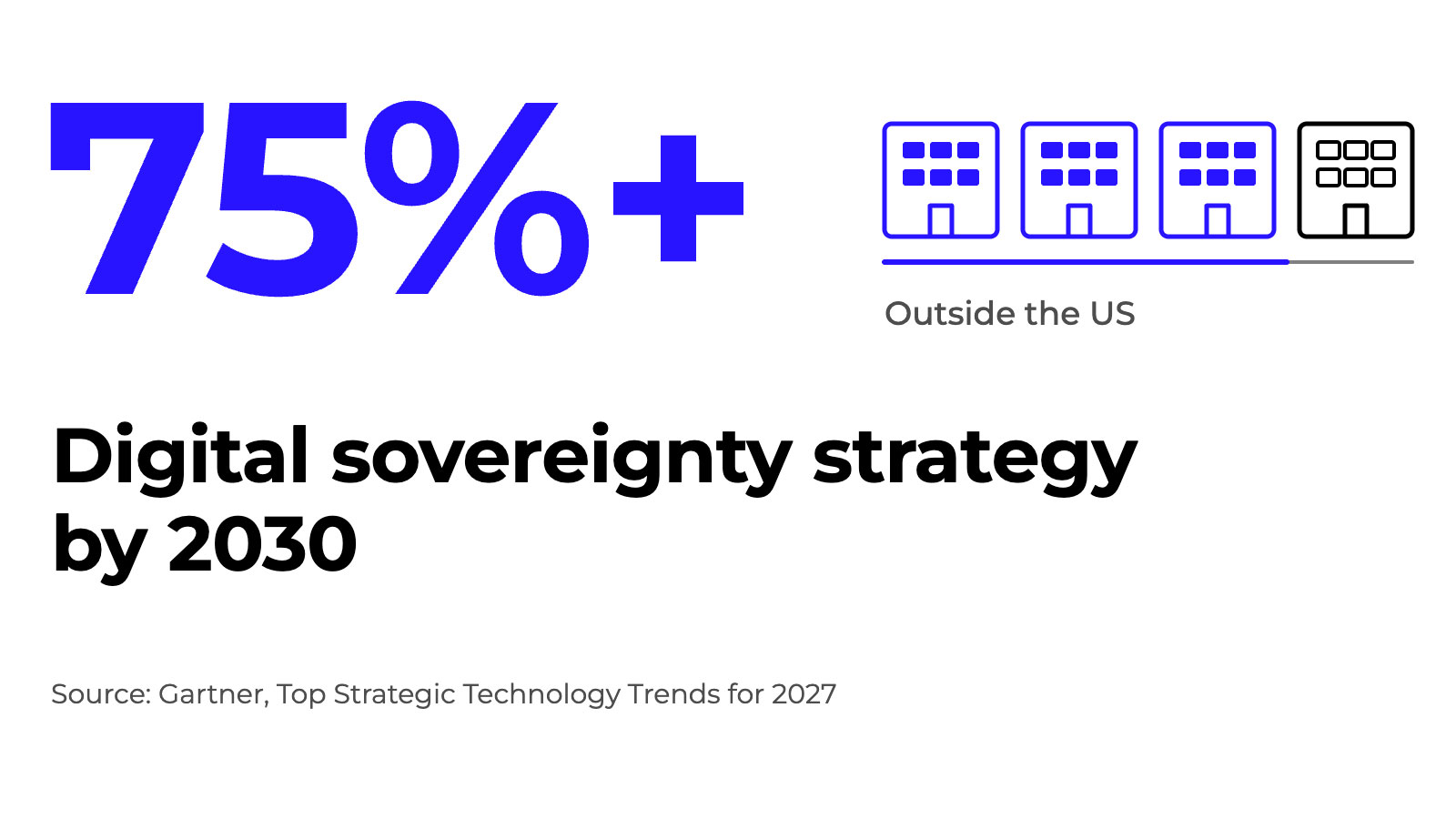
It's not just us saying this. In their 2026 and 2027 predictions reports, Gartner has named digital sovereignty as one of their top technology trends. They predict that by 2030, more than three out of four organizations outside the US will have a digital sovereignty plan.
And it doesn't actually stop with your provider. Your provider also has their own suppliers, each under potentially different laws, with their own staff who could access your data. Every extra party is another door into your SOC, and another door that is built for someone else could potentially be used or abused by an adversary.
Will your AI be available when you need it most?
Let's say that your data is safe. Does that actually mean that your agentic SOC will be there when you need it most? To be transparent, any technology can go down. Clouds can have outages and your connection can be hit by a DDoS attack, whether you're using a public AI service or running your own.
The real difference is the choice. When your SOC's AI is a service that you rent, you get the provider's resilience, but on the provider's terms. So when they go down, you go down with them. When you run it on your own, then you decide.
So the choice is yours. If you're comfortable in your own cloud account, that's great. If you're worried about outages or being cut off from the internet, or having specific requirements around data sovereignty, then you can run AI in your own data center or even fully air-gapped. So it's going to always work regardless of what's happening outside.
But consider what happens when the AI is up and running and it still actually won't help you. In July, Hugging Face disclosed that an autonomous AI agent had broken into part of its production infrastructure. Their team actually tried to use hosted AI models to analyze over 17,000 attacker events.
The first problem was that that meant feeding real attack commands and exploit code into the AI system, and the model's safety guardrails blocked them. The model couldn't tell a defender from an attacker. In the end, Hugging Face was able to finish the job only by running a model on its own hardware.
Another example involves OpenCode, a popular AI coding tool, which was recently under sustained attack. The co-founder, Dax Raad, said on social media that the AI models that they relied on for this incident kept refusing to help. They ended up applying to an AI provider's cyber defense program, which is essentially asking for permission to defend themselves.
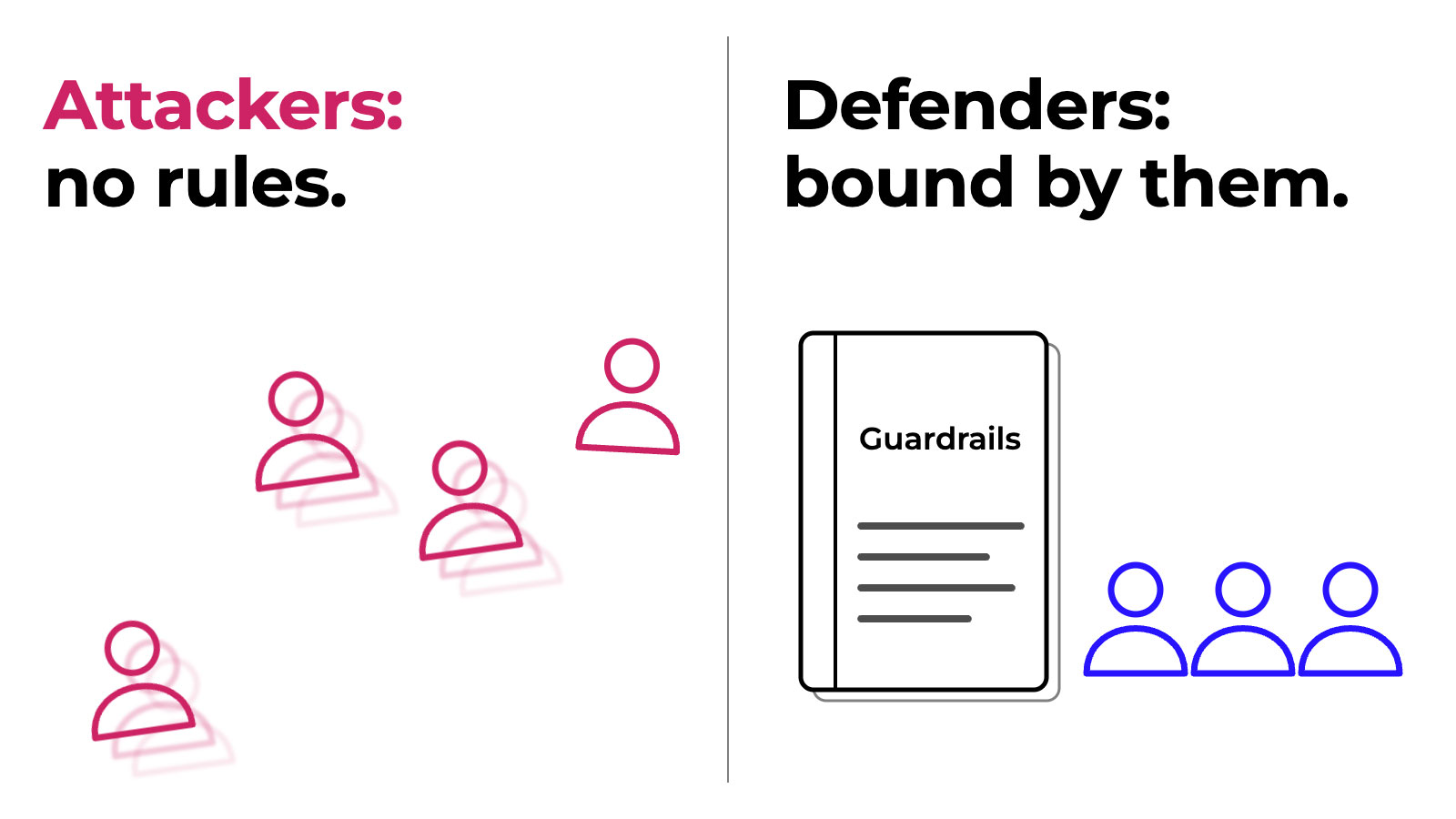
The attackers didn't have to follow any usage policy, but the defenders did. That's a really awkward and uncomfortable position to be in. This is where Trellix IVX fits in. It’s purpose-built to detonate malware, so there's no content policy from a third party deciding whether you're allowed to look at it.
Additionally, when you rely on someone else's AI model, they can update it or retire it whenever they like. This means your SOC might behave differently tomorrow than it did today, for better or worse.
Can cost concerns short-circuit your agentic SOC?
Then there are cost concerns to consider. Most cloud AI is priced on usage or tokens, so more alerts means a bigger bill. When attackers flood SOCs with noise and loud activity (like ransomware), with usage-based AI, that same noise drives up your bill as well.
That leaves you with two choices: Pay to investigate all of it, or start ignoring alerts. Ransomware serves as a good example. It's loud, and there are thousands of alerts firing across hundreds of machines at once. Not only that, investigating ransomware is a long, exhausting process, involving weeks of scoping and hunting afterwards to validate the cleanup. The meter is constantly running while you’re dealing with it all.
Meanwhile, the CFO is already dealing with some hard calls about ransom, recovery, and downtime costs. The ransomware hits and your SOC needs to investigate everything right now—but the first question you get from finance is, “Why has our AI bill just increased 500%?” If that spend needs approval or hits a budget cap, your SOC slows to a halt exactly when it needs to go fastest.
Conclusion
So who controls your SOC? When we look at Trellix Wise for Private Cloud, the answer is simple: You do. You choose where it runs, who sees the data and, with a flat-free subscription, what it costs. Think of it as a spectrum of control, and you choose where you want to sit.
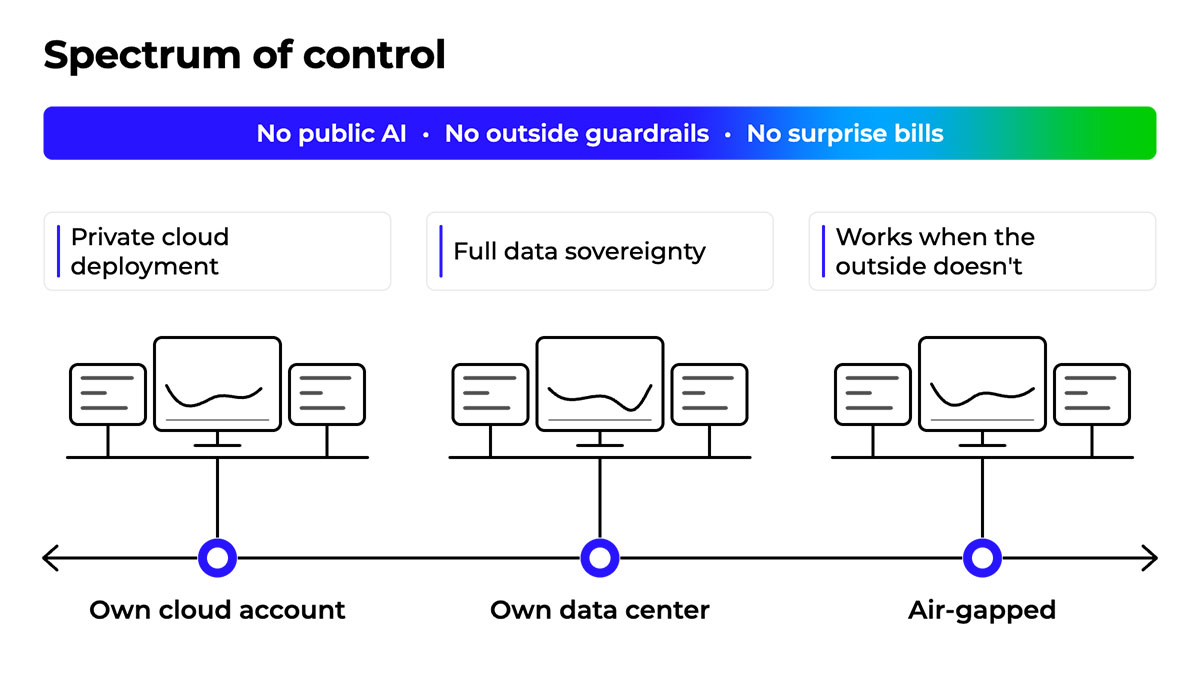
Running Trellix Wise for Private Cloud in your own cloud account means no public AI service, no outside guardrails, and no surprise model changes or bills. Then, if you want to move Trellix Wise for Private Cloud into your own data center, you have full data sovereignty. A final step is to go fully air-gapped, which means Trellix Wise for Private Cloud keeps working even when the environment outside doesn't.
Hugging Face learned this the hard way. The AI that finally did help them was the one that they ran themselves. So it really all comes down to control. Who controls your data, who controls whether your SOC is running, and who controls the bill?
To learn more about Trellix Wise for Private Cloud, read our solution brief or request a demo.
RECENT NEWS
-
Oct 13, 2026
Trellix research reveals the true cost of ungoverned AI
-
Oct 13, 2026
Trellix redefines cyber defense for the AI era
-
Aug 24, 2026
Trellix Expands Leadership Team to Accelerate Growth and Cyber Resilience
-
May 19, 2026
Trellix Appoints Joe Chen as Chief Technology Officer
-
Apr 08, 2026
Trellix prevents enterprise data exposure in sanctioned and shadow AI
RECENT STORIES
Latest from our newsroom
Get the latest
Stay up to date with the latest cybersecurity trends, best practices, security vulnerabilities, and so much more.
Zero spam. Unsubscribe at any time.