
Blogs
The latest cybersecurity trends, best practices, security vulnerabilities, and more

The Hidden Risk: How Attackers Target Your Active Directory (And How to Stop Them)
By Adam G. Tomeo · September 23, 2026
Executive summary
Cybercriminals are constantly updating their hacking software, but their core goals rarely change. One of their favorite targets is the company's master key file (known as NTDS.dit), which stores every user’s password in the organization.
Historically, security tools looked for specific, known hacking software (like a virus scanner looking for a specific file). But today, hackers can easily alter their tools to sneak past. This blog explains why security teams must stop looking for specific tools and start looking for suspicious behavior.
Using our security solution, Trellix Network Detection and Response (NDR), we simulated a full attack to show how we can catch hackers based on their actions, not just the tools they use. To make it even easier, our built-in AI assistant, Trellix Wise, automatically investigates these alerts so security teams can stop hackers faster.
The five steps of a network robbery
Think of your corporate network like a highly secure building. Here is how a hacker breaks in and steals the keys to the kingdom:
Phase 1: Breaking in (initial access)
The hacker sends a trick email (like a fake invoice) or uses a rigged software installer. Once an employee clicks it, a tiny piece of invisible code slips into the computer's memory, hiding inside a normal, everyday program so it doesn't raise any red flags.
Phase 2: Calling home (command & control)
The hidden code opens a secret, encrypted tunnel back to the hacker's computer. Because the tunnel is encrypted, basic security tools can't see what's inside. The hacker then uses a trick to fool the computer into giving them "manager" (system) privileges.
Phase 3: Stealing passwords (credential theft)
Now that the hacker has manager privileges, they rummage through the computer's short-term memory to find passwords and digital ID badges left behind by other users. They use these stolen IDs to start moving deeper into the network.
Phase 4: Sneaking into the server room (lateral movement)
The hacker uses their new credentials to log in to the domain controller—the main server that runs the entire company network. They want the NTDS.dit file, which is the master database for every company’s password.
- The problem: The server locks this file, preventing it from being copied while the system is running.
- The hacker's trick: They use a built-in backup feature (called Volume Shadow Copy) to take a snapshot of the locked file, effectively making a copy without unlocking it. They also steal the decryption key file (the SYSTEM hive) needed to read it.
Phase 5: Smuggling the goods (exfiltration)
The hacker disguises the massive password file as normal web traffic and uploads it to a cloud storage account. Once it's on their own computer, they use offline tools to unlock it. Result: The hacker now owns every single username and password in the company.
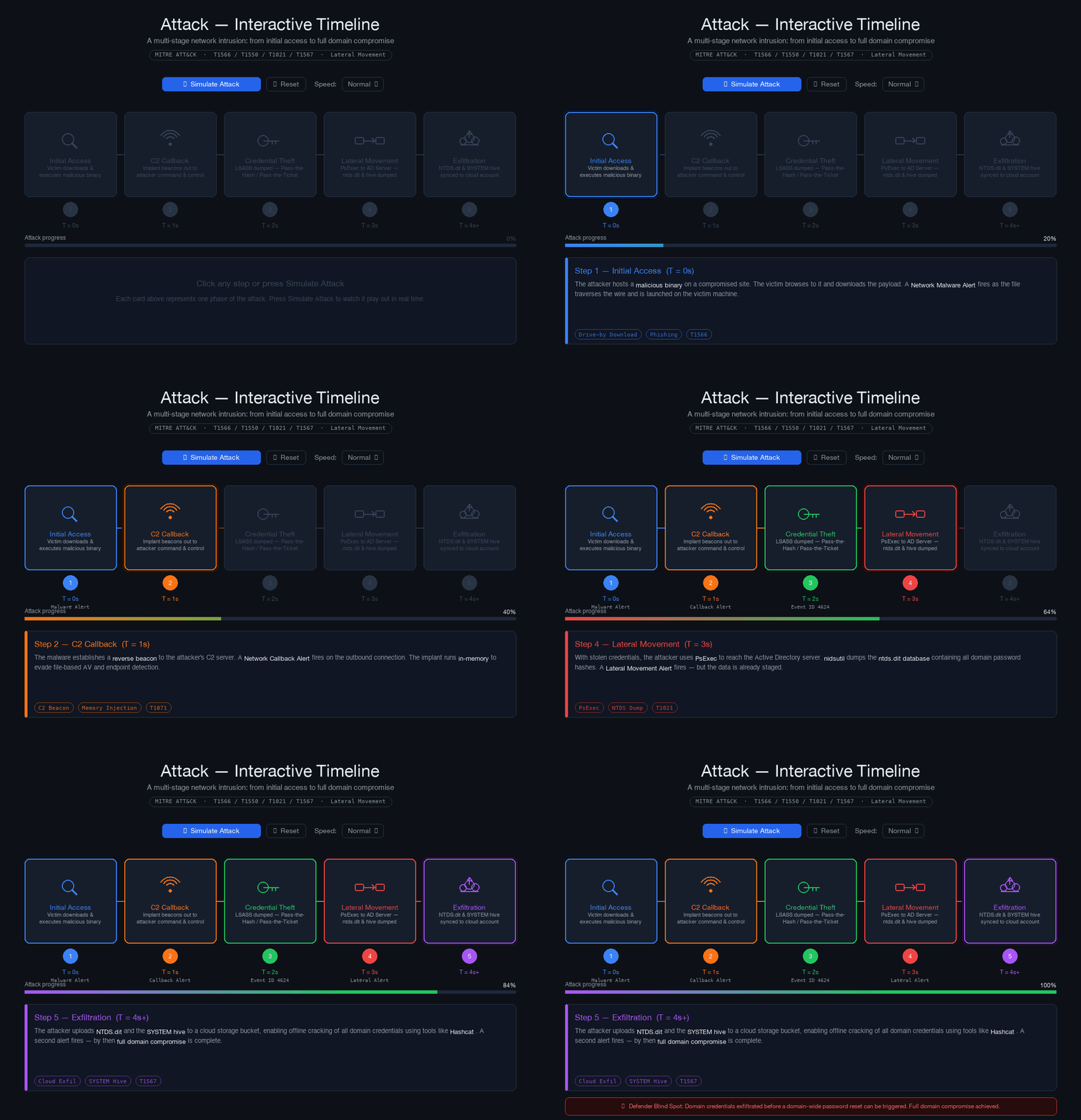
How the attack is done (The hacker's perspective)
There are two main ways hackers pull this off once they are inside:
- Method 1: Automated grab (PsExec): The hacker uses a script that automatically connects to the main server, creates that sneaky backup copy of the password database, and downloads it directly to their computer without installing any obvious hacking files on the server.
- Method 2: Interactive control (Meterpreter): If the hacker already has a live connection to the server, they use a sophisticated, invisible command prompt that lives entirely in the computer's temporary memory (RAM). This allows them to manually browse files and copy the database silently.
How Trellix NDR catches them
Our security portfolio doesn't wait to see a specific piece of hacking software. Instead, it sounds the alarm based on the actions being taken. It catches the thief at two critical moments: when the file is copied and when the file is smuggled out.
1. Catching the theft (The dump)
When a hacker tries to copy the master password database, Trellix NDR instantly flags it.
- AI summary: Our AI, Trellix Wise, immediately explains what happened in plain English.
- The blueprint (MITRE): It maps a hacker's behavior against a global library of known hacking tactics, so you know exactly which strategy they are using.
- Action plan: It provides the IT team with step-by-step instructions for immediately locking down the server immediately.
- Visual map (Knowledge Graph): It creates a visual chart showing exactly which computer the hacker used, which server they targeted, and what files were touched.
2. Catching the smuggling (The exfiltration)
If the hacker tries to send that massive password file from your company to the internet, Trellix NDR detects the unusual data spike. It flags the outbound traffic, connects it to the earlier theft, and provides immediate containment steps to pull the plug on the transfer before it finishes.
Conclusion & safety checklist
Relying on old-school antivirus software that only looks for known bad files isn't enough anymore. Hackers are too smart for that. True security requires looking at behavior—noting when an unusual computer suddenly tries to back up and export the company’s entire password list.
Five quick fixes to protect your organization:
- Use VIP protection: Put your most important administrator accounts into a protected users group that restricts how their passwords can be cached.
- Lock the backups: Limit who can use the backup feature (Volume Shadow Copy) on your main servers.
- Watch the doors: Place security sensors on every digital pathway leading to your main password servers.
- Set alarms for large outbound files: Set up alerts for any unusually large file transfers leaving your main servers.
- Monitor network traffic: Watch for specific network conversation patterns that indicate someone is trying to sync or steal directory data.
To see how Trellix NDR can help protect your Active Directory, request a demo.
RECENT NEWS
-
Aug 24, 2026
Trellix Expands Leadership Team to Accelerate Growth and Cyber Resilience
-
May 19, 2026
Trellix Appoints Joe Chen as Chief Technology Officer
-
Apr 08, 2026
Trellix prevents enterprise data exposure in sanctioned and shadow AI
-
Mar 02, 2026
Trellix strengthens executive leadership team to accelerate cyber resilience vision
-
Feb 10, 2026
Trellix SecondSight actionable threat hunting strengthens cyber resilience
RECENT STORIES
Latest from our newsroom
Get the latest
Stay up to date with the latest cybersecurity trends, best practices, security vulnerabilities, and so much more.
Zero spam. Unsubscribe at any time.