
Blogs
The latest cybersecurity trends, best practices, security vulnerabilities, and more

Impersonating the Boss: How Attackers Drain Your Active Directory
By Adam G. Tomeo · September 9, 2026
In the world of cybersecurity, some attacks are like a smash-and-grab robbery—loud, messy, and obvious. But there is another, far more dangerous type of attack: the DCSync attack. It is quiet, sophisticated, and if successful, it gives a hacker total control over an organization’s entire digital identity.
Here is a look at how this identity theft on a corporate scale works, and why we need a smarter way to catch it.
The scene: The "boss" servers
In almost every large company, the network is managed by domain controllers (DCs). Think of these as the boss servers. They hold the primary list of every employee's username and password.
Because big companies have many offices, they usually have multiple boss servers. To ensure everyone can log in regardless of where they are, these servers constantly communicate with each other to sync their lists. If you change your password in the New York office, the New York DC tells the London DC, so your new password works there, too.
The heist: The "fake ID" trick
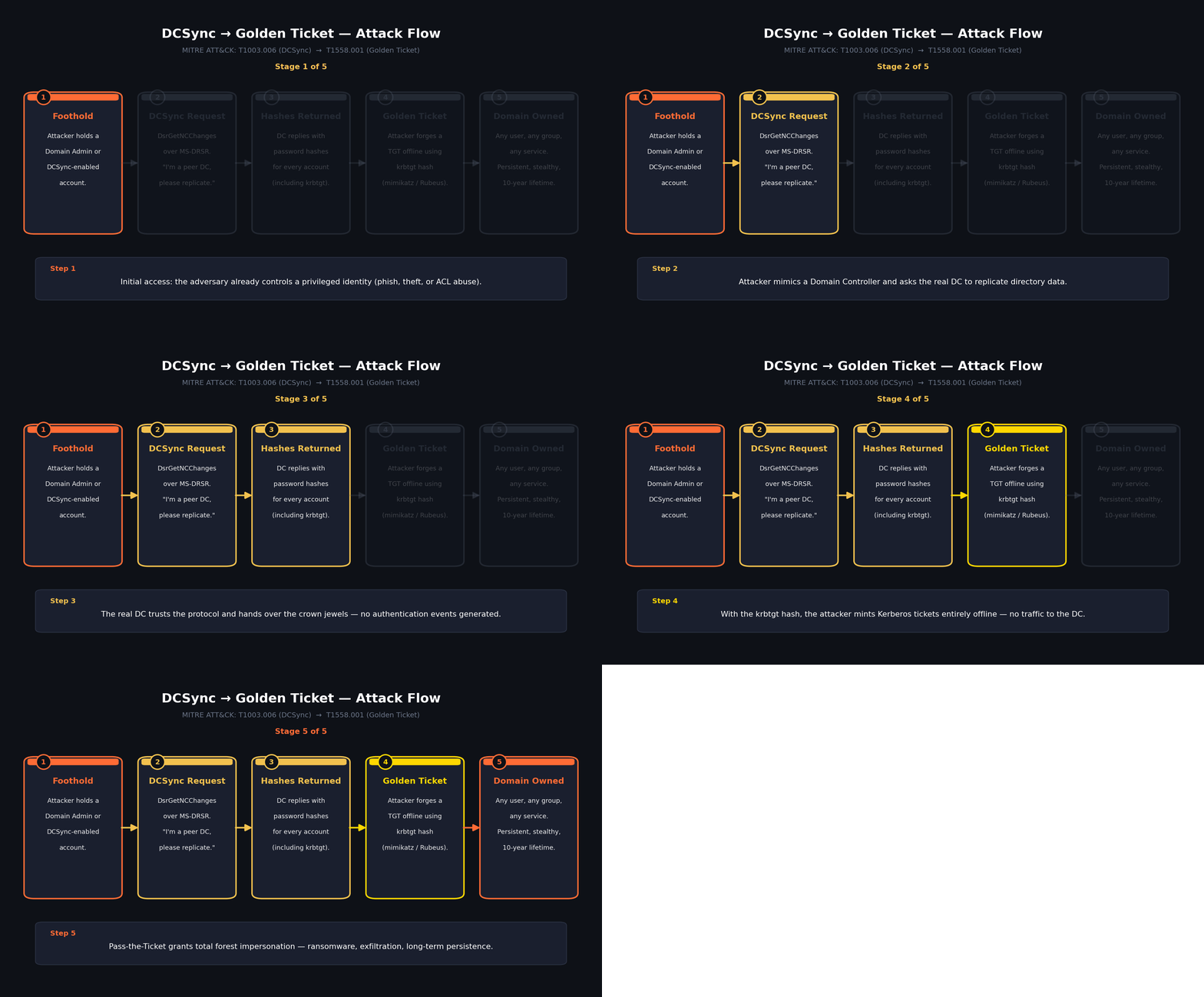
A DCSync attack happens when a hacker gets inside a domain admin or a specially-permissioned account and sends a message to the domain controller.
The hacker doesn’t try to break the server. Instead, they use a clever lie. They pretend to be another boss server and say:
"Hey, I'm the new server in the basement. I'm a bit behind—can you send me a copy of every single password in the company so I can get synced up?"
If the boss server doesn’t detect the malicious behavior, it hands over the keys (technically known as password hashes).
The result: The Golden Ticket
Once the hacker has the primary keys, they can create what’s called a Golden Ticket. This isn't just a metaphor—it is a digital file that tells the network, "I am the super admin, and I am allowed to go anywhere and see anything."
With a Golden Ticket, the hacker can:
- Read any executive’s emails.
- Access private HR records.
- Deploy malware or wipe systems.
- Stay hidden for months or even years.
Why old security fails
Traditionally, security software works like a most wanted list. It looks for specific signatures (the digital fingerprints) of known hacking tools like Mimikatz.
The problem? Hackers are constantly changing their tools. They "change their clothes" or "wear a mask" so the security system doesn't recognize them. If the tool doesn't match the most wanted list, the security software doesn’t register that it is malicious and the attacker can essentially walk through the front door.
A smarter way: Watching the behavior
At Trellix, we believe it doesn't matter what tool a hacker uses; what matters is what they are doing. This is called Network Detection & Response (NDR).
Instead of looking for a specific most wanted tool, our system watches the behavior of the network. It asks common-sense questions:
- Who is asking? Is this request coming from a known DC, or is it coming from an accountant’s laptop?
- Is this normal? Should a laptop in the marketing department suddenly be asking for the entire company’s password list?
By focusing on the technique (the act of pretending to be a server) rather than the tool (the specific software), NDR can catch hackers even if they are using brand-new, never-before-seen methods.
The bottom line
Identity is the new perimeter of business security. You can have the strongest firewalls in the world, but if a hacker tricks your system into handing over the keys, those walls won't matter.
By monitoring how data moves across the network and flagging identity lies in real-time, NDR can help stop the Golden Ticket heist before the thief ever leaves the building.
To see how Trellix can help protect against the DCSync attack, and other malicious attacks, request a demo.
RECENT NEWS
-
Oct 13, 2026
Trellix redefines cyber defense for the AI era
-
Oct 13, 2026
Trellix research reveals the true cost of ungoverned AI
-
Aug 24, 2026
Trellix Expands Leadership Team to Accelerate Growth and Cyber Resilience
-
May 19, 2026
Trellix Appoints Joe Chen as Chief Technology Officer
-
Apr 08, 2026
Trellix prevents enterprise data exposure in sanctioned and shadow AI
RECENT STORIES
Latest from our newsroom
Get the latest
Stay up to date with the latest cybersecurity trends, best practices, security vulnerabilities, and so much more.
Zero spam. Unsubscribe at any time.